

Menopause and Chinese Medicine: A Practical Guide to Hot Flushes, Sleep and Mood in Midlife
Menopause is the point when periods stop for good, usually between the ages of 45 and 55, as levels of oestrogen and other reproductive hormones fall. For many women the years around it bring hot flushes, night sweats, broken sleep, anxiety and low mood. In this guide, the UK Centre of Chinese Medicine (CCMUK) explains how Chinese medicine has understood this transition for more than two thousand years, the patterns practitioners look for, what modern research really shows, and how traditional approaches can sit safely alongside NHS care.
Key takeaways
- In the UK the average age of menopause is 51, and around 1 in 100 women reach it before the age of 40.
- Classical Chinese medicine describes a woman’s life in seven-year cycles, with menopause arriving around the seventh cycle, at about 49.
- Practitioners see menopause as a natural transition, not an illness, and treat the individual pattern behind each woman’s symptoms.
- Kidney Yin deficiency, the classic picture behind hot flushes and night sweats, is the most common pattern described.
- Research on acupuncture and Chinese herbal medicine for hot flushes is still inconclusive, so they are best used alongside, not instead of, proven treatments.
- NICE recommends discussing HRT and menopause-specific cognitive behavioural therapy (CBT) with your GP.
Menopause in numbers
World Menopause Day was marked on 18 October, and the International Menopause Society chose Chronic Pain in Midlife as its 2026 theme, a reminder that menopause affects far more than periods. According to the NHS, most women experience some symptoms, which often begin months or years before the last period, during the perimenopause, and continue for around four years afterwards. For some women they last much longer.
Voices that broke the silence
For generations menopause was rarely discussed in public. That has changed quickly, thanks in part to well-known women who chose to share their own experiences.
Davina McCall
Her 2021 Channel 4 documentary Sex, Myths and the Menopause sparked a national conversation about symptoms, HRT and the lack of support many women receive.
Mariella Frostrup
The broadcaster co-wrote Cracking the Menopause and co-founded the campaign group Menopause Mandate to improve care and awareness across the UK.
Michelle Obama
The former First Lady spoke on her podcast about having a hot flush during an official helicopter trip, helping to normalise a symptom many women hide.
Naomi Watts
The actor has spoken about entering perimenopause in her thirties and founded the brand Stripes to help women talk openly about midlife.
How does Chinese medicine understand menopause?
The oldest description comes from the Huangdi Neijing (The Yellow Emperor’s Inner Classic), which describes a woman’s life unfolding in cycles of seven years. In the seventh cycle, around the age of 49, it says the Tian Gui, the substance that governs fertility and menstruation, becomes exhausted and the periods stop. The transition is presented as a natural turning point rather than a disease.
Central to this picture are the Kidneys, which in Chinese medicine store Jing (essence) and hold the body’s deepest reserves of Yin, the cooling and nourishing force, and Yang, the warming and activating force. As essence naturally declines with age, the balance between Yin and Yang can become unsteady, and the symptoms of menopause are understood as the outward signs of that imbalance.
Chinese medicine does not see menopause as something going wrong. It sees a change of season, and asks how to help the body move through it with balance.
Four common patterns practitioners look for
Two women with the same symptom may be treated quite differently, because a practitioner looks at the whole pattern: tongue, pulse, sleep, digestion, temperature and mood. These are the patterns described most often in menopause.
Kidney Yin deficiency
Hot flushes, night sweats, dryness, restlessnessThe most classic picture. With less cooling Yin, heat rises upwards, especially in the afternoon and at night. Formulas built around Liu Wei Di Huang Wan are traditionally used.
Kidney Yang deficiency
Feeling cold, tiredness, low back ache, fluid retentionLess common in the hot-flush stereotype, but often seen. Many women show a mix of Yin and Yang deficiency, for which the formula Er Xian Tang was developed.
Heart and Kidney not communicating
Insomnia, palpitations, anxiety, poor memoryWhen Kidney water cannot cool Heart fire, the Shen (mind) is unsettled. Formulas such as Tian Wang Bu Xin Dan are traditionally used to calm the mind and support sleep.
Liver Qi stagnation with heat
Irritability, mood swings, breast tenderness, flushing with stressEmotional strain blocks the smooth flow of Liver qi, which can generate heat. Jia Wei Xiao Yao San is the classical formula most associated with this pattern.
Mood changes around menopause are common and real. If you are interested in how Chinese medicine views emotional wellbeing more broadly, see our guide to the seven emotions in Chinese medicine.
What does the research say?
As a centre dedicated to research and education, CCMUK believes women deserve an honest account of the evidence. Here is where things currently stand.
HRT and menopause-specific CBT
NICE’s menopause guideline, updated in 2024, sets out the benefits and risks of hormone replacement therapy and recommends considering menopause-specific cognitive behavioural therapy for hot flushes and night sweats, low mood and sleep problems. These remain the first options to discuss with your GP.
Acupuncture
A Cochrane review found no clear difference between real and sham acupuncture for hot flushes across eight trials, and rated the evidence low or very low quality. Some women still report feeling calmer and sleeping better, and acupuncture is generally safe with a qualified practitioner, but it should not be relied on as a treatment for hot flushes.
Chinese herbal medicine
A 2016 Cochrane review concluded there was not enough evidence to say whether Chinese herbal medicines were more or less effective than placebo or HRT for hot flushes. Better-designed trials are needed, and this is exactly the kind of question CCMUK’s research work aims to help answer.
Where herbal formulas fit
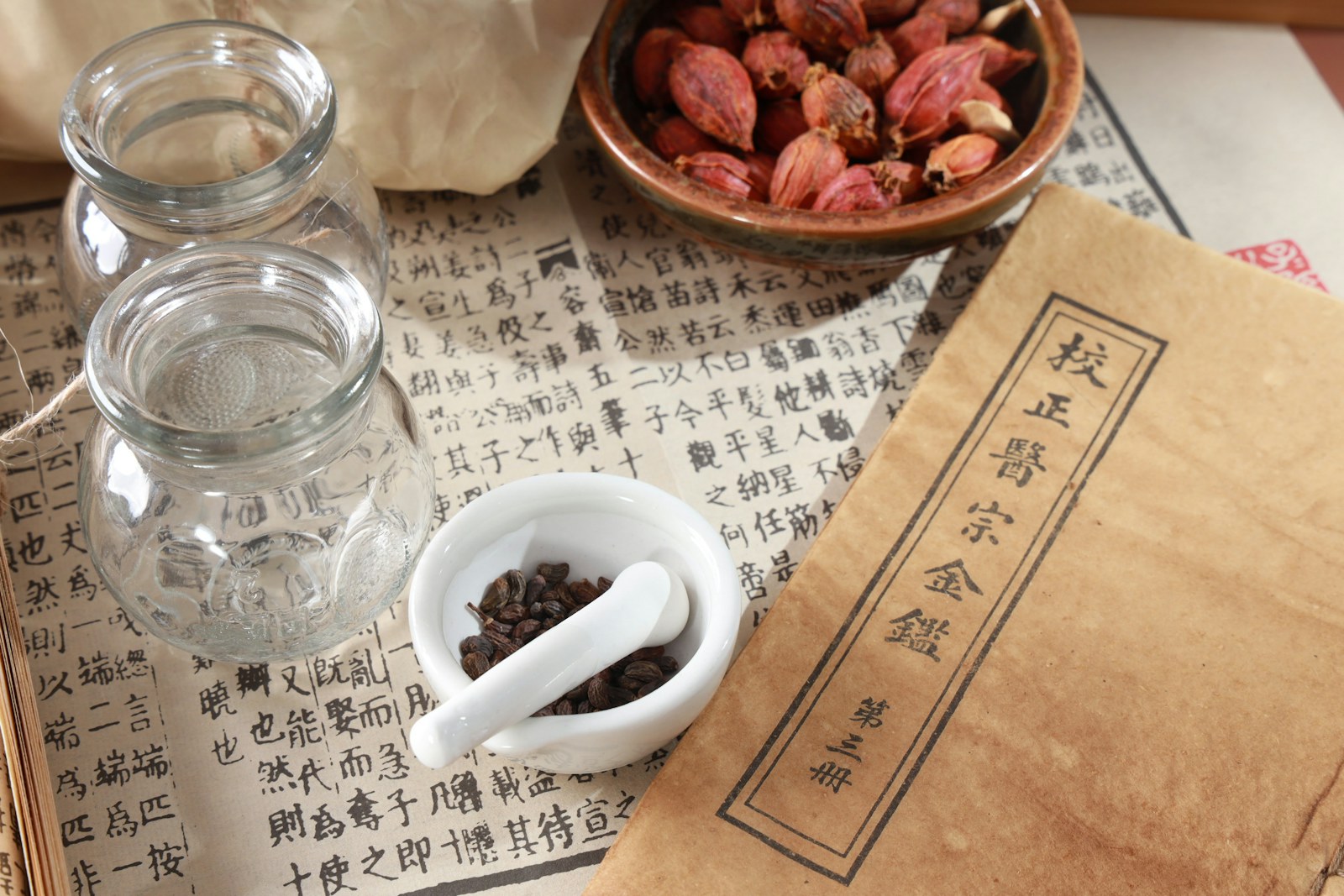
In a Chinese medicine clinic, herbal formulas are chosen for the individual pattern and adjusted as symptoms change, which is why a personal consultation with a qualified practitioner is always the best starting point. Many women also like to continue with traditional formulas at home between appointments.
For those looking for well-made products, Aura Nutrition, part of the same Phoenix family as CCMUK, produces classical formulas such as Jia Wei Xiao Yao San as concentrated, GMP-certified food supplements, and has a dedicated women’s wellness range. Whatever you choose, speak to your GP or pharmacist before starting any herbal product if you take HRT, antidepressants, blood thinners or other prescribed medicines, as some herbs can interact with them.
Seven everyday habits for an easier transition
- Cool, do not overheat: Chinese dietary therapy suggests limiting spicy food, alcohol and strong coffee, which are thought to add heat and are also common hot-flush triggers.
- Nourish Yin with food: traditional choices include black sesame, goji berries, mung beans, pears, tofu and leafy greens, alongside a balanced diet rich in calcium for bone health.
- Protect your sleep: keep the bedroom cool, wear layers you can remove, and try to wind down before 11pm, the hour Chinese medicine links with restoring Yin.
- Move gently and regularly: tai chi, qigong, walking and strength exercise help mood, sleep, weight and bones.
- Breathe through a flush: slow, paced breathing when a hot flush starts can help you feel more in control, and is part of many CBT programmes.
- Keep qi moving emotionally: talking, journalling and creative outlets ease the frustration Chinese medicine links with Liver qi stagnation.
- Keep a symptom diary: noting flushes, sleep and mood helps both your GP and your practitioner choose the right support.
Combining Chinese medicine safely with NHS care
Chinese medicine works best as part of a joined-up approach. Choose a practitioner who belongs to a recognised professional register, holds insurance and is happy to work alongside your GP; our guide to what makes a TCM practitioner qualified explains what to look for. Always tell each professional about everything you take, and never stop HRT or other prescribed treatment without medical advice.
When to see your GP
Speak to your GP or call NHS 111 if:
- menopausal symptoms are affecting your daily life, work or relationships
- you have symptoms of menopause before the age of 45
- you have any bleeding after your periods have stopped for 12 months or more
- low mood or anxiety is persistent. If you are struggling, you can call Samaritans free on 116 123, day or night.
Frequently asked questions
How does Chinese medicine view menopause?
Chinese medicine sees menopause as a natural life transition rather than an illness. Classical texts describe it arriving in a woman’s seventh seven-year cycle, around 49, as the Tian Gui is exhausted. Symptoms are understood as an imbalance of Yin and Yang, usually linked to the Kidneys.
What is Kidney Yin deficiency in menopause?
It is the most commonly described menopausal pattern in Chinese medicine. With less cooling Yin, heat rises, producing hot flushes, night sweats, dryness, restlessness and poor sleep, often worse in the afternoon and at night.
Can acupuncture help hot flushes?
The evidence is inconclusive. A Cochrane review found no clear difference between real and sham acupuncture for hot flushes, and the evidence was low quality. Some women find it relaxing and helpful for wellbeing, but it should not replace treatments recommended by your GP.
Are Chinese herbs safe to take with HRT?
Some herbs can interact with HRT and other medicines. Always speak to your GP or pharmacist before combining them, and ideally choose formulas with guidance from a qualified Chinese herbal medicine practitioner who knows your full medical history.
What foods does Chinese medicine recommend during menopause?
Cooling, Yin-nourishing foods such as black sesame, goji berries, mung beans, pears, tofu and leafy greens are traditionally favoured, while spicy food, alcohol and strong coffee are limited because they are thought to add heat.
What age does menopause start in the UK?
Menopause usually happens between 45 and 55, and the average age in the UK is 51. Around 1 in 100 women experience it before 40, known as premature menopause or premature ovarian insufficiency.
What treatments does NICE recommend for menopause?
NICE’s menopause guideline recommends discussing the benefits and risks of HRT and considering menopause-specific cognitive behavioural therapy for hot flushes, night sweats, low mood and sleep problems.
The bottom line
Menopause is a natural change, but that does not mean anyone should simply put up with symptoms that affect their life. Chinese medicine offers a thoughtful, individual way of understanding the transition, and practical habits around food, sleep, movement and emotional balance that many women find helpful. The research on acupuncture and herbs is still developing, so the best approach combines traditional wisdom with the evidence-based options your GP can offer, chosen with care and with qualified support.
Learn more with CCMUK
CCMUK is a not-for-profit centre dedicated to advancing Chinese medicine in the UK through education, research and publications. Explore our courses and CPD programmes, upcoming conferences and events, or read more on our blog.
Sources
- NHS. Menopause.
- NICE (2015, updated 2024). Menopause: identification and management (NG23).
- International Menopause Society. World Menopause Day 2026: Chronic Pain in Midlife.
- Dodin S et al. (2013). Acupuncture for menopausal hot flushes. Cochrane Database of Systematic Reviews.
- Zhu X, Liew Y, Liu ZL (2016). Chinese herbal medicine for menopausal symptoms. Cochrane Database of Systematic Reviews.
- Huangdi Neijing Suwen, Chapter 1: Discourse on the Heavenly Truth of High Antiquity.
This article is for educational purposes only and is not medical advice. Always consult a qualified healthcare professional about your health.