

Gua Sha Explained: The Chinese Medicine Behind It, What Research Shows and How to Do It Safely
A few years ago, most people in the UK had never heard of gua sha. Today, smooth jade and rose quartz stones sit on bathroom shelves across the country, and facial gua sha videos have been watched millions of times. But gua sha began as something quite different: a traditional Chinese medicine therapy for pain, stiffness and feverish illness, practised in homes and clinics for centuries. In this guide, the UK Centre of Chinese Medicine (CCMUK) explains what gua sha really is, how body and facial gua sha differ, what research has found, and how to stay safe.
Key takeaways
- Gua sha means “scraping sha”: a smooth-edged tool is stroked firmly over oiled skin.
- Traditional body gua sha often leaves temporary red or purple marks called sha, which usually fade within a few days.
- Facial gua sha is a much gentler, modern adaptation and should not leave marks.
- Small trials suggest body gua sha may ease chronic neck and back pain in the short term, but larger studies are needed.
- Avoid it on broken skin, and check with your GP first if you take blood thinners or have a bleeding disorder.
What is gua sha?
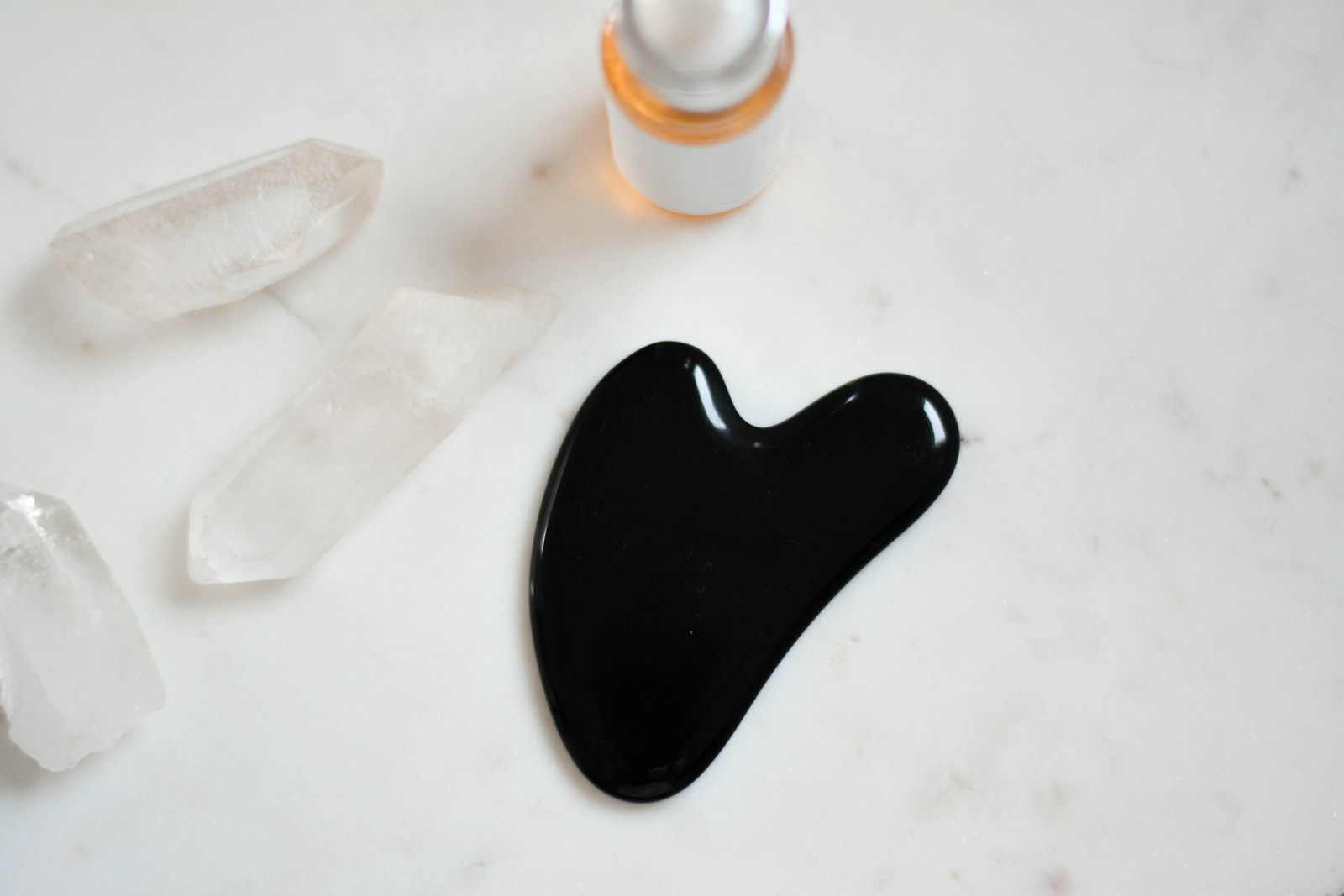
In Chinese, gua means to scrape and sha describes the reddish, sand-like spots that can rise to the surface of the skin. A practitioner applies oil or balm, then uses a smooth-edged tool, traditionally made of horn, jade or even a porcelain soup spoon, to make firm, repeated strokes along the back, neck, shoulders or limbs. The pressure brings small amounts of blood into the surface tissue, creating the characteristic marks.
In Chinese medicine theory, gua sha is used to release stagnation: to get Qi and Blood moving where they are stuck, and to let out heat or “wind” from the surface of the body. That is why it has traditionally been used for stiff necks, aching shoulders, muscle tension and the early stages of colds and fevers.
Where there is free flow, there is no pain. Gua sha is one of the oldest ways Chinese medicine has tried to restore it.
Body gua sha and facial gua sha: what is the difference?
Traditional body gua sha
Firm strokes on the back, neck, shoulders or limbs, usually by a trained practitioner. It is meant to bring up sha marks, which can look dramatic but are generally painless and fade within two to four days.
Facial gua sha
A modern beauty adaptation using very light pressure on the face and neck, often with a flat stone. It should never leave marks. People mainly use it as a relaxing self-massage and to ease facial tension and puffiness.
What does the research say?
Chronic neck and back pain
A randomised trial published in Pain Medicine in 2011 found that people with chronic neck pain who received gua sha reported less pain a week later than those who used a heat pad. Similar small trials have looked at chronic low back pain with encouraging short-term results. These studies are small and could not be blinded, so larger trials are needed.
How it might work
A 2007 study using laser imaging found that gua sha increased blood flow in the treated area for several minutes afterwards, and people reported less pain at both the treated spot and nearby areas. Researchers think changes in local circulation and pain signalling may both play a part.
Facial gua sha
There is very little scientific research on facial gua sha. Claims about lifting, sculpting or anti-ageing effects are not supported by good evidence, although many people enjoy it as a relaxing part of their routine.
How to try facial gua sha safely at home
- Start with clean skin and a little oil: the tool should glide, never drag.
- Hold the tool almost flat: at about 15 degrees to the skin, with light pressure.
- Stroke outwards and upwards: from the centre of the face towards the ears, then down the sides of the neck.
- Keep it short: five minutes is plenty. Stop if it hurts or leaves red marks.
- Keep your tool clean: wash it after every use and never share it.
Body gua sha is a firmer technique and is best done by a trained practitioner who can judge pressure and recognise when it is not appropriate. Our guide to what makes a TCM practitioner qualified explains what to look for. Practitioners and healthcare professionals who want to learn traditional techniques like gua sha properly can find professional training in Chinese medicine through the Phoenix Academy, our sister organisation.
Who should avoid gua sha?
Do not use gua sha on broken, sunburnt, inflamed or infected skin, or over moles, varicose veins or recent injuries. Speak to your GP before trying it if you:
- take blood-thinning medicines or have a bleeding or clotting disorder
- are pregnant
- have a skin condition, diabetes with poor circulation or numbness, or a weakened immune system
- have pain that is new, severe or unexplained, which should always be checked first
Frequently asked questions
What is gua sha?
Gua sha is a traditional Chinese medicine technique in which a smooth-edged tool is stroked firmly over oiled skin. In Chinese medicine it is used to move stagnant Qi and Blood, and it has traditionally been used for muscle pain, stiffness and the early stages of colds.
Are gua sha marks normal?
With body gua sha, red or purple marks called sha are normal and usually fade within two to four days. Facial gua sha should be gentle and should not leave any marks.
Does gua sha work for neck pain?
Small trials suggest gua sha may reduce chronic neck pain in the short term. A 2011 randomised trial found less pain after gua sha than after using a heat pad, but larger, longer studies are needed.
Does facial gua sha really lift the face?
There is little scientific evidence that facial gua sha lifts, sculpts or reverses ageing. Many people enjoy it as a relaxing self-massage, which may ease tension and puffiness for a short time.
Who should not have gua sha?
Avoid gua sha on broken, inflamed or infected skin. People on blood thinners, with bleeding disorders, who are pregnant or who have certain skin or circulation problems should check with their GP first.
The bottom line
Gua sha is far older and more interesting than its social media fame suggests. As a traditional body therapy, it shows early promise for neck and back pain, though the research is still small. As a facial routine, it is best enjoyed as gentle self-care rather than a beauty miracle. Used carefully, by the right person and on the right skin, it is a simple tradition with a long history.
Learn more with CCMUK
CCMUK is a not-for-profit centre dedicated to advancing Chinese medicine in the UK through education, research and publications. Explore our courses and CPD programmes, read our introduction to Chinese medicine, or browse more on our blog.
Sources
- Braun M et al. (2011). Effectiveness of traditional Chinese “gua sha” therapy in patients with chronic neck pain: a randomized controlled trial. Pain Medicine.
- Nielsen A et al. (2007). The effect of gua sha treatment on the microcirculation of surface tissue: a pilot study in healthy subjects. Explore.
- Nielsen A (2012). Gua Sha: A Traditional Technique for Modern Practice. 2nd edition. Churchill Livingstone.
This article is for educational purposes only and is not medical advice. Always consult a qualified healthcare professional about your health.